How to Sell an Inherited Model Train Collection
A Step-by-Step Guide from an Experienced Model Train Buyer If you've inherited a model train collection and aren't sure what to do next, you're not alone. This guide walks you through every step—from deciding what to keep to understanding value and choosing the best way to sell—with practical advice based on years of helping families settle estates and downsize collections.
5/20/202613 min read
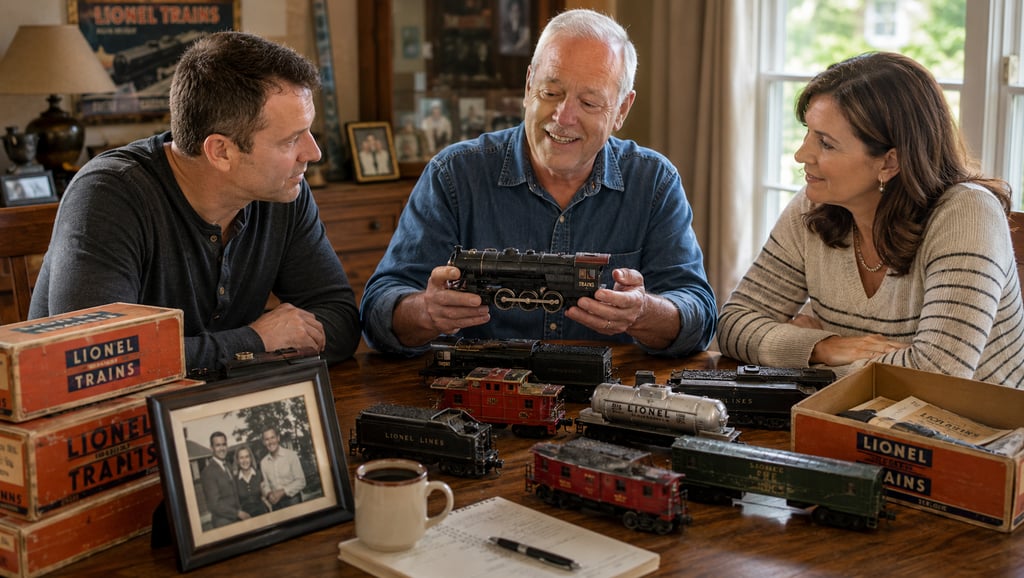
My post content
Table of Contents
Step 2 — Decide What Your Family Wants
Step 3 — Avoid the Biggest Mistakes
Step 4 — Understand What You Have
Step 5 — Decide What's Most Important to You
Step 6 — Choose the Best Selling Method
Step 7 — When You Need to Empty the House Quickly
How to Sell an Inherited Model Train Collection
A Step-by-Step Guide from an Experienced Model Train Buyer
If you've inherited a model train collection and aren't sure what to do next, you're not alone. This guide walks you through every step—from deciding what to keep to understanding your options and choosing the best way to sell—based on years of helping families settle estates, downsize collections, and make informed decisions without pressure.
If You Only Read One Thing...
If you've inherited a model train collection, here's my advice:
✔ Don't throw anything away. Even the original boxes, paperwork, and accessories can be important.
✔ Talk with your family before making any decisions. Decide if anyone would like to keep sentimental pieces.
✔ Don't assume everything is valuable—but don't assume it isn't either.
✔ Take time to understand what you have. You don't need to become a model train expert, but a little knowledge will help you make better decisions.
✔ Choose the selling method that matches your goals. Some families want the highest return. Others want the least work. Others simply need to settle an estate quickly.
There isn't one right answer.
There is only the answer that's right for your family.
Inheriting a Model Train Collection Is Different
Most people don't wake up one morning planning to sell model trains.
Usually, something much bigger has happened.
Perhaps you've lost your father or grandfather.
Maybe you're helping your parents downsize after living in the same home for forty years.
Perhaps you're the executor of an estate and suddenly responsible for hundreds—or even thousands—of trains, boxes, accessories, and paperwork.
If that's your situation, I want you to know something.
You're not alone.
Over the years, I've helped many families through this exact process.
Some were grieving.
Some were overwhelmed.
Some worried they would be taken advantage of because they knew absolutely nothing about model trains.
Others simply wanted someone to explain what they were looking at.
Almost every conversation begins the same way.
"We don't know anything about model trains."
My answer is always the same.
That's perfectly okay.
You don't need to become an expert overnight.
That's why I wrote this guide.
Step 1: Don't Panic
One of the biggest mistakes families make isn't really a mistake at all.
It's panic.
The house has sold.
The attorney wants everything removed.
Relatives are asking questions.
Everyone has an opinion.
Before long, people feel pressured to make decisions as quickly as possible.
My advice?
Take a breath.
Very few decisions need to be made today.
I've worked with families who had weeks.
Others had only a few days.
Either way, making thoughtful decisions almost always produces better results than making rushed ones.
Remember...
You're not simply dealing with a collection of trains.
You're dealing with part of someone's life.
"You don't need to become a model train expert before asking for help."
Step 2: Start with Your Family—Not the Trains
People often assume the first question I ask is:
"What kind of trains are they?"
Actually...
It isn't.
The first question I ask is much simpler.
What do you want to do?
That changes everything.
Would you like to sell everything?
Would you like to keep a few trains?
Has everyone in the family had an opportunity to look through the collection?
Is there a son, daughter, or grandchild who might enjoy continuing the hobby?
Those questions matter because once a collection is sold...
It's gone.
Forever.
One thing I've learned over many years is this:
The trains families keep are almost never the most valuable ones.
They're the ones with memories.
I've seen families keep:
Dad's Christmas locomotive.
Grandpa's first train from the 1930s.
A favorite caboose.
The train everyone remembered running around the layout.
Those decisions have nothing to do with market value.
They have everything to do with family history.
If there are sentimental pieces, decide what those are before talking about selling anything.
You'll almost never regret keeping one meaningful train.
You may regret selling it.
Step 3: Avoid the Two Biggest Mistakes
Most mistakes I see are completely understandable.
Families simply don't know what they don't know.
Fortunately, they're also easy to avoid.
Mistake #1
Assuming Everything Is Valuable
Sometimes families believe every train must be worth hundreds of dollars.
Other times they assume the entire collection is worthless.
Neither assumption is usually correct.
Most collections contain a mixture of items.
Some are highly desirable.
Some are fairly common.
Some have little value today.
Don't guess.
Learn what you have first.
(For a complete explanation of how values are determined, read our guide "What Is My Model Train Collection Worth?")
Mistake #2
Dividing the Collection Too Soon
I've seen families begin dividing trains before anyone understands what's there.
That's perfectly understandable.
Everyone wants a keepsake.
But matching sets sometimes become separated.
Original boxes disappear.
Documentation gets lost.
I recommend this instead.
Take inventory first.
Let everyone choose sentimental items.
Then decide how to handle the remainder.
It's a much easier—and fairer—process.
Step 4: Understand What You Have
Before deciding how to sell a collection, it's helpful to understand what you're looking at.
That doesn't mean you need to become a model train expert.
Far from it.
It simply means taking enough time to understand the basics before making permanent decisions.
Most inherited collections contain a mixture of items.
You may find:
Locomotives
Freight cars
Passenger cars
Track
Switches
Transformers
Buildings
Accessories
Original boxes
Catalogs
Receipts
Club newsletters
Repair parts
One thing that surprises many families is that not everything has the same value.
In fact, some of the largest collections I've seen contained hundreds of common items along with just a handful of particularly desirable trains.
Likewise, I've evaluated relatively small collections where a few exceptional locomotives represented most of the value.
That's why I always recommend understanding the collection before making decisions about selling it.
You Don't Need to Know Every Manufacturer
Families often apologize because they don't know the difference between Lionel, American Flyer, MTH, Atlas, Bachmann, or HO Scale.
Please don't.
That's completely normal.
Part of my job is helping people identify what they have.
We'll often sit together and simply go through the collection one section at a time.
I'll explain:
who made it
approximately when it was made
which items collectors generally look for
what tends to have stronger demand
what is more common
The goal isn't to turn you into a collector.
It's to help you understand enough to feel confident about your decisions.
"Knowledge reduces uncertainty. You don't need to become an expert—you simply need enough information to make a confident decision."
One Thing That Often Surprises Families
When people inherit a large layout, they often assume the value is spread evenly across everything.
In reality, that's rarely the case.
The locomotives and rolling stock usually account for most of the collection's value.
Track, switches, scenery materials, transformers, and many common accessories generally contribute much less than people expect.
That doesn't mean those items aren't useful.
They certainly are.
But they're usually not the pieces collectors are searching for.
If you'd like a more detailed explanation of what affects value—including condition, rarity, original boxes, and today's market—I've covered that in our guide:
👉 What Is My Model Train Collection Worth?
Step 5: Decide What's Most Important to Your Family
One thing I've learned after years of helping families is this:
Every family's goals are different.
Some people tell me,
"We simply need to settle the estate."
Others say,
"We're willing to spend months selling everything if it means getting the highest return."
Others just want the collection to go to someone who will appreciate it.
None of those answers are wrong.
The important thing is identifying your priorities before choosing a selling method.
I usually ask families to think about three questions.
1. Is Maximizing Every Dollar Most Important?
If so, selling individual items yourself may produce the highest overall return.
But it also requires the greatest investment of time.
Researching.
Photographing.
Creating listings.
Packing.
Shipping.
Answering questions.
Handling returns.
For some families, that's worthwhile.
For others, it simply isn't practical.
2. Is Convenience More Important?
Many families tell me,
"We just don't want to spend the next year selling trains."
That's perfectly understandable.
If convenience is your priority, selling the collection in one transaction may be a much better fit.
While the overall selling price may differ from selling hundreds of individual items yourself, many families find the reduced stress and immediate resolution are well worth it.
3. Is Time the Biggest Factor?
Estate deadlines.
Real estate closings.
Moving.
Health concerns.
Life doesn't always give us unlimited time.
If your priority is resolving the collection quickly, that's an important consideration when deciding how to sell.
The "best" method isn't always the one that produces the highest possible selling price.
Sometimes it's the one that best fits your family's situation.
There Isn't One Right Answer
This is probably the most important thing I can tell you.
People often ask me,
"What's the best way to sell an inherited model train collection?"
My answer is always the same.
It depends.
If someone enjoys selling online and has plenty of time...
Their answer may be eBay.
If someone inherited thousands of trains while settling an estate...
Their answer may be completely different.
Every collection.
Every family.
Every situation.
Is unique.
That's why I encourage people to think about their goals first.
The right answer is the one that helps your family accomplish what matters most.
If you'd like a detailed comparison of every selling option—including eBay, train shows, auction houses, consignment services, and direct buyers—you'll find it in our guide:
👉 What's the Best Way to Sell a Model Train Collection?
A Conversation I Have Quite Often
Families sometimes tell me,
"Dad spent forty years building this collection. We just want it to go to someone who'll appreciate it."
I understand exactly what they mean.
I've been collecting model trains since I was twelve years old.
I'm still actively collecting today.
When I find something that fits my own collection, I enjoy giving it a new home.
Of course, that also means I occasionally end up with duplicates.
Those trains don't simply sit on a shelf.
I make every effort to place them with fellow collectors, longtime customers, friends, and others I know will appreciate them.
Even trains that have relatively little monetary value still have purpose.
Whenever possible, I'll repair them.
Sometimes I'll sell them inexpensively to someone just entering the hobby.
Other times I'll donate them to younger enthusiasts to help encourage the next generation of collectors.
To me, every collection tells a story.
I think those stories deserve to continue.
Step 6: Choose the Selling Method That Fits Your Goals
By this point, you've taken the time to understand what you have, talked with your family about sentimental items, and thought about what's most important to you.
Now it's time to decide how you'd like to sell the collection.
One of the biggest misconceptions I hear is that there's a single "best" way to sell model trains.
There isn't.
The right selling method depends entirely on your priorities.
Some families are willing to spend months researching, photographing, listing, packing, and shipping individual trains in hopes of maximizing every dollar.
Others simply want the collection handled professionally so they can settle an estate and move forward.
Still others are working under a deadline and need the collection removed quickly.
Each of those situations calls for a different approach.
Generally speaking, every selling method involves balancing three competing priorities:
How much money you'll ultimately receive
How much time and effort you're willing to invest
How quickly you need to be paid
No selling method excels at all three.
If you want the highest possible return, you'll usually invest the most time and effort.
If convenience and immediate payment are your priorities, you'll generally receive wholesale rather than retail pricing because the buyer assumes the future work, costs, and risks.
The important thing is choosing the option that best fits your family's goals—not someone else's.
Learn More About Your Selling Options
If you'd like a detailed comparison of every selling method—including:
Selling on eBay
Selling at train shows
Live auction houses
Consignment services
Selling directly to a train buyer
...along with the advantages, disadvantages, typical returns, effort required, and payment timelines for each, I encourage you to read our complete guide:
📖 Related Guide
What's the Best Way to Sell a Model Train Collection?
Step 7: When Time Isn't on Your Side
Sometimes families call me with a sense of urgency.
"The house closes in two weeks."
"Mom is moving into assisted living next month."
"We need to settle the estate as soon as possible."
Those situations are more common than you might think.
The first thing I tell them is simple.
Don't panic.
Even when there's a deadline, you still have options.
Over the years, I've worked with many families facing tight schedules. In many cases, we're able to purchase an entire collection in a single visit, allowing the family to focus on everything else that comes with settling an estate or preparing a home for sale.
I've always believed that flexibility is part of good customer service.
If there's a deadline, I do everything I reasonably can to make it work.
The last thing families need during an already stressful time is someone making the process more difficult.
"Sometimes the greatest value we provide isn't buying the trains—it's reducing the family's stress."
Step 8: Why I Sometimes Tell Families Not to Sell
People are often surprised when I say this.
Sometimes...
I recommend not selling.
That may sound like an unusual thing for someone who buys model train collections to admit.
But it's true.
Every once in a while, I'll see a beautiful little starter set.
It's in wonderful condition.
It belonged to Dad.
Maybe it isn't worth a tremendous amount of money.
Instead of making an offer, I'll tell the family:
"If it were mine, I'd probably keep it."
Why?
Because the memories attached to that train may be worth far more than its current market value.
Display it during Christmas.
Pass it on to a grandchild.
Tell the story behind it.
Sometimes preserving a family tradition is worth much more than the money.
I've also had families tell me they remember receiving much higher offers years ago.
Often they're right.
The market has changed.
If they aren't under any pressure to sell and today's prices don't meet their expectations, I've occasionally suggested waiting.
Markets rise.
Markets fall.
If there's no urgency, there's nothing wrong with keeping the collection and seeing what the future brings.
My goal has never been simply to buy trains.
My goal is to help families make decisions they'll still feel good about years from now.
One Last Thought About Legacy
One of the things I hear most often is:
"Dad spent forty years building this collection. We just want it to go to someone who'll appreciate it."
I understand that completely.
Because I'm a collector too.
I've been collecting model trains since I was twelve years old.
I know what it feels like to search for that one locomotive you've wanted for years.
I know the excitement of finding an original box you thought you'd never see again.
I know the friendships that develop at train shows and train clubs.
For many collectors, the trains weren't the most important part of the hobby.
The friendships were.
The conversations.
The restoration projects.
The weekends spent building layouts.
The excitement of running trains with children and grandchildren.
The collection tells part of that story.
The people tell the rest.
One thing I hope every family takes away from this process is a better understanding of why their loved one enjoyed the hobby so much.
It wasn't just about owning trains.
It was about creating memories.
Our Promise to Every Family
Whether someone ultimately sells their collection to us or not, I hope they leave feeling four things.
They were treated fairly.
They never felt pressured.
They learned something they didn't know before.
They now understand what their loved one spent so many years enjoying.
If they decide another selling method is better for their situation...
I'll respect that.
If they decide to keep part of the collection...
I'll encourage that.
If they decide to wait...
That's okay too.
Because my responsibility isn't simply to buy trains.
It's to help people make informed decisions they'll feel good about long after the collection is gone.
Questions People Ask Before Selling an Inherited Model Train Collection
Should I sell the entire collection or keep some of it?
There isn't a right or wrong answer. In fact, one of the first questions I ask families is whether anyone would like to keep a few sentimental pieces before making any decisions. The trains families keep are almost never the most valuable—they're usually the ones with the greatest memories attached to them.
What if I don't know anything about model trains?
That's perfectly normal. Most people I meet have never collected trains. You don't need to learn the hobby before asking for help. An experienced buyer can explain what you have, answer your questions, and help you understand your options.
Should I let family members choose trains before selling the collection?
Yes—but I recommend taking inventory first. Once everyone understands what's in the collection, it's much easier to decide which sentimental pieces should stay in the family before selling the remainder.
Should I clean the trains before having someone evaluate them?
Generally, no. Light dusting is fine, but avoid polishing, painting, lubricating, or attempting repairs. Improper cleaning can sometimes reduce collector value.
Do the original boxes really matter?
Yes. While the boxes themselves usually aren't worth a tremendous amount, they help identify the trains, protect them during transportation, and make them more desirable to collectors. If you still have the original boxes, keep them with the collection.
My father said his trains were worth much more years ago. What happened?
Model train values change over time, just like many other collectibles. Today's market—not yesterday's—determines current value. If you aren't under pressure to sell, it may be worth discussing your options before making a decision.
Can someone tell me what my collection is worth from photographs?
Photographs are an excellent starting point and often help identify what you have. However, important details such as condition, missing parts, repairs, and completeness usually require seeing the collection in person before a fair purchase offer can be made.
What if I need to empty the house quickly?
Don't panic. Many estate situations involve deadlines. An experienced buyer can often purchase an entire collection in one transaction, eliminating months of sorting, listing, packing, and shipping.
What if I decide not to sell?
That's perfectly okay. Sometimes keeping a meaningful train, passing it down to another generation, or simply waiting until the timing feels right is the best decision. You should never feel pressured to sell before you're ready.
Final Thoughts
If you've inherited a model train collection, remember this:
You don't have to figure everything out by yourself.
You don't need to become an expert.
You don't need to know every manufacturer.
You don't need to understand every price guide.
You simply need someone willing to answer your questions honestly and help you understand your options.
At East Coast Train Buyers, that's exactly what we strive to do.
Whether you eventually sell your collection to us, choose another selling method, or decide to keep it in the family, our hope is the same:
That you feel informed.
That you feel respected.
That you never feel pressured.
And that, years from now, you can look back knowing you made the decision that was right for your family.
East Coast Train Buyers
We're collectors helping collectors and families sell model train collections honestly, fairly, and with as little hassle as possible.
Explore
Get in Touch
Seasonal hubs in NY & SC
We travel to you across the East Coast
© 2026 East Coast Train Buyers
Over 50 years of model railroading experience.
TCA Members & Officers