What's the Best Way to Sell a Model Train Collection?
A Buyer's Honest Advice
5/6/20269 min read
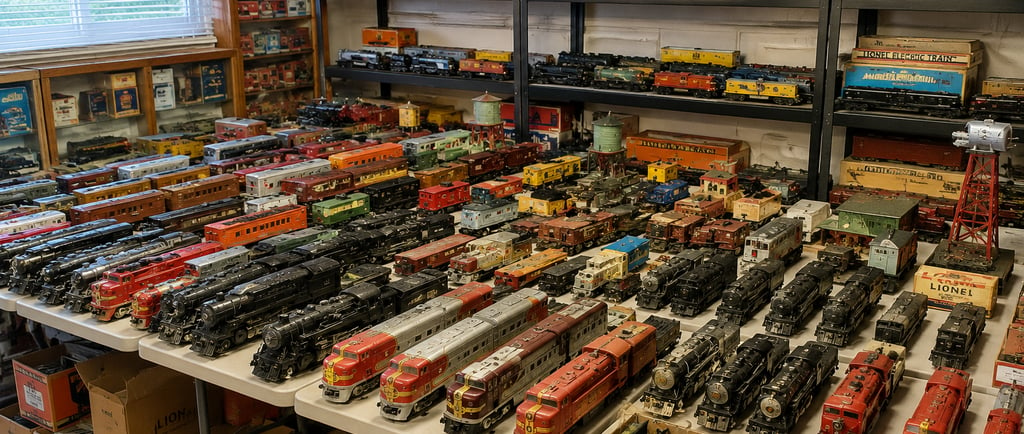
If you're searching for the best way to sell a model train collection, you're probably facing one of several situations. Perhaps you've inherited a collection from a parent or grandparent. Maybe you're downsizing, moving, or simply no longer interested in the hobby. Or perhaps you're a longtime collector wondering how to turn years of collecting into cash.
After buying model train collections for many years, I've learned that most people aren't really asking, "What's the best way to sell?" They're asking a much more important question:
"What's the best way for me to sell my collection?"
The answer depends entirely on your priorities.
Start With Your Goals, Not Your Trains
Before worrying about values or where to sell, ask yourself a few simple questions.
Are you settling an estate?
Are you helping a parent downsize?
Are you moving?
Are health concerns making it time to simplify?
Are you simply ready to move on from the hobby?
Then ask yourself what matters most.
Do you want the highest possible return?
Do you want to sell everything quickly?
Is convenience more important than maximizing every last dollar?
Are you willing to spend months photographing, listing, packing, and shipping?
Once you're honest about your priorities, choosing the right selling method becomes much easier.
The Biggest Misconception I Hear
One of the most common things I hear is:
"These trains are old, so they must be valuable."
Sometimes that's true.
Many times it isn't.
Age alone doesn't determine value.
Some trains from the 1940s and 1950s are highly collectible. Others were produced in enormous quantities and are fairly common today. Likewise, some limited-production models made only twenty years ago can be worth considerably more than trains twice their age.
The factors that usually matter most are:
Overall condition
Manufacturer
Rarity
Current collector demand
Original boxes
Completeness
The market determines value—not age.
The Market Has Changed
One of the biggest lessons I've learned over the years is that model train values are cyclical.
I've met many families who were told years ago that a collection was worth significantly more than it is today.
In many cases, that information was accurate—at the time.
But collectible markets evolve.
Many of today's sellers are collectors who purchased trains during the 1970s, 1980s, and 1990s, or families selling collections built by enthusiasts from the 1950s and 1960s. As that generation reaches retirement or settles estates, more collections are entering the marketplace.
At the same time, the number of active buyers for certain categories has declined.
That's simply how markets work.
The value of a collection isn't determined by what someone paid decades ago or what a price guide once said.
It's determined by what knowledgeable buyers are actually paying today.
Condition Is the First Thing I Notice
People often ask me what I look for first when evaluating a collection.
The answer surprises many of them.
It's not the brand.
It's not the age.
It's not even whether it's Lionel.
The very first thing I notice is overall condition.
A clean, well-maintained collection that has been carefully stored generally holds its value much better than one that's been exposed to moisture, heavy wear, rust, or missing parts.
Collectors appreciate trains that have been cared for.
Condition affects value more than almost any other single factor.
Thinking About Selling on eBay?
eBay can absolutely be an excellent option.
But it's important to understand what you're comparing.
Many sellers tell me:
"I saw one just like mine listed on eBay for $500."
My response is always the same.
Don't look at asking prices.
Look at completed sales.
I usually recommend eliminating the highest and lowest selling prices and averaging the remaining completed sales to get a realistic estimate of current market value.
Even then, that's only the selling price—not what you'll actually keep.
As a seller, you may have:
Selling fees
Payment processing fees
Shipping expenses
Packing materials
Insurance
Customer questions
Returns
The possibility of fraudulent return claims
Dozens or even hundreds of hours invested
The number that matters isn't the selling price.
It's your net proceeds.
Many people are surprised to discover that after all of the expenses and months of work, the difference between selling individually and accepting a strong dealer offer is much smaller than they expected.
Keep the Original Boxes
One practical piece of advice I give almost everyone is this:
Don't throw away the original boxes.
The boxes themselves usually aren't worth a tremendous amount.
But they do add value to the overall collection.
Original packaging:
Helps identify the item.
Protects trains during transportation.
Makes resale easier.
Is preferred by many collectors.
If you still have the boxes, keep them with the trains until you've decided how you're going to sell.
What Actually Increases the Value of a Collection?
People often ask why two collections that appear similar can receive very different offers.
Some of the biggest factors include:
Factors that generally increase value
Excellent overall condition
Strong collector demand
Complete locomotives and rolling stock
Original boxes
Organized collections that are easy to transport
Well-cared-for storage
Factors that can reduce value
Rust or corrosion
Water damage
Missing parts
Heavy wear
Large quantities of common items with limited demand
One factor many people never consider is accessibility.
A neatly organized collection already packed in totes or boxes is much easier—and safer—to move than hundreds of loose items scattered throughout a basement or attic.
That additional labor becomes part of the overall evaluation.
One Surprise for Many Sellers
When I visit a collection, many people expect me to immediately start making an offer.
Instead, I usually spend time explaining what they're looking at.
We'll talk about:
Which trains are generally more desirable
How values are determined
Why some pieces are worth more than others
Which selling methods might fit their goals best
If I think certain items would likely perform better through a specialized auction, I'll say so.
I also explain something many families don't realize:
Track, switches, scenery, transformers, and many common accessories usually aren't where most of the value is.
They're important for operating a layout, but they often contribute far less to the overall value than the locomotives and rolling stock.
My goal isn't simply to buy a collection.
It's to help people understand what they actually have.
So What's the Best Way to Sell?
There isn't one answer.
If your priority is maximizing every possible dollar—and you're willing to invest months of work—selling individually through eBay or at train shows may produce the highest return.
If your priority is convenience with the possibility of somewhat higher gross prices, consignment or auction houses may make sense for certain collections.
If your priority is immediate payment, minimal effort, and avoiding months of work, a direct sale to a reputable buyer is often the most practical solution.
The best method is the one that matches your goals, not someone else's.
Our Philosophy at East Coast Train Buyers
At East Coast Train Buyers, we believe informed sellers make the best decisions.
We're collectors first.
That means we enjoy explaining what people have, how values are determined, and what factors affect an offer.
We'll answer questions whether you sell to us or not.
We'll explain how we arrived at our valuation.
If we believe another selling method is likely to serve you better, we'll tell you.
And because we operate with a low-overhead business model, we're often able to make stronger cash offers than many traditional train dealers.
Most importantly, we never pressure anyone into making a decision.
Buying a collection should never feel uncomfortable.
Final Thoughts
After buying collections for many years, I've realized that the best transaction isn't necessarily the one where we purchase the trains.
It's the one where the seller walks away feeling they were treated honestly and fairly.
Whether you decide to sell to us, list your trains on eBay, consign them, or even keep them for another generation, I hope you leave with four things:
A clear understanding of what you have.
A realistic understanding of today's market.
Confidence that you weren't pressured.
The knowledge needed to make the decision that's right for you.
If someone leaves saying,
"That was fair."
"I never felt pressured."
"I learned a lot."
"Now I finally understand what I have."
then we've accomplished exactly what we set out to do.
And if they feel comfortable recommending us to a friend or family member—even if they never sold us a single train—that's the greatest compliment we could ever receive.
------------------------------------
Questions People Ask Before Selling Their Model Train Collection
-------------------------------------
Is it better to sell a model train collection all at once or piece by piece?
It depends on your priorities. Selling individual items often produces the highest overall return, but it also requires significantly more time and effort. You'll need to research values, photograph each item, create listings, answer questions, pack shipments, and handle returns. Selling an entire collection to a reputable buyer usually results in a lower gross price, but it provides immediate payment, eliminates months of work, and removes the risks associated with selling hundreds of individual items.
How much do model train dealers typically pay?
Most model train dealers generally pay 50% to 60% of current market value because they assume all of the costs and risks involved in reselling the collection. At East Coast Train Buyers, our low-overhead business model often allows us to offer 65% to 70% of current market value for desirable collections. Every collection is unique, however, and factors such as condition, demand, completeness, and ease of transportation all influence the final offer.
Is eBay the best place to sell model trains?
eBay can be an excellent choice for knowledgeable sellers who have the time and patience to sell items individually. However, it's important to compare your net proceeds, not just the selling price. Once selling fees, shipping costs, packing materials, payment processing, returns, and the value of your time are considered, many sellers discover that the difference between selling on eBay and accepting a strong dealer offer is much smaller than they expected.
Are old model trains always valuable?
No. Age alone does not determine value. Some trains from the 1940s and 1950s are highly collectible, while others were mass-produced and remain relatively common today. Likewise, certain newer limited-production models may be worth considerably more than much older trains. Condition, rarity, manufacturer, collector demand, and completeness usually have a much greater impact on value than age alone.
Should I clean my trains before selling them?
In most cases, no. Light dusting is fine, but avoid using cleaners, lubricants, abrasives, or attempting repairs unless you have experience with collectible model trains. Improper cleaning can unintentionally damage paint, decals, finishes, or original components, reducing collector value.
Do the original boxes really matter?
Yes. While the boxes themselves usually aren't worth a significant amount on their own, they add value to the overall collection. Original boxes help verify the item, provide better protection during transportation, and make trains easier to resell. If you still have the original packaging, keep it with the trains until you've completed the sale.
What types of model trains are worth the most?
There is no simple answer, but collections containing desirable Lionel, American Flyer, brass models, limited-production locomotives, well-preserved postwar pieces, and rare prewar items often generate the strongest interest. Ultimately, current collector demand and overall condition are more important than any single manufacturer or age.
Do track, switches, and scenery add much value?
Usually not. While they are essential parts of a working layout, common track sections, switches, scenery materials, and accessories were often produced in large quantities and generally contribute much less to the overall value than locomotives, rolling stock, and other highly collectible items.
How do I know what my collection is worth?
The best starting point is to look at completed sales, not asking prices. Asking prices simply reflect what sellers hope to receive. Completed sales show what buyers have actually been willing to pay in today's market. If you're researching online, compare several recent completed sales rather than focusing on a single unusually high or unusually low result.
What information should I gather before contacting a buyer?
If possible, have a general idea of:
The manufacturers (such as Lionel, American Flyer, MTH, Atlas, or Bachmann)
The scale or gauge (O, HO, N, etc.)
Approximately how many locomotives, cars, and accessories you have
Whether you still have the original boxes
A few photographs of the collection
Don't worry if you don't know all the details. An experienced buyer can usually identify most items from clear photographs and answer any questions you may have.
How long does it take to sell a large model train collection?
That depends on the selling method you choose. Selling individual items on eBay or at train shows may take many months—or even years—for very large collections. Consignment services and auction houses also require waiting for sales and payment. Selling directly to a qualified buyer is typically the fastest option, often allowing an entire collection to be sold in a single transaction.
Why do different buyers offer different prices?
No two buyers operate the same business. Overhead expenses, storage costs, transportation, labor, inventory turnover, and resale methods all influence what a buyer can afford to pay. That's why it's often worthwhile to obtain more than one offer before making your decision.
Do I have to decide immediately after receiving an offer?
Absolutely not. A reputable buyer should give you time to consider your options, discuss the decision with your family, and ask questions. Selling a collection is an important decision, and you should never feel pressured to make it on the spot.
Which Selling Method Is Best For Me?
Train Shows, Ebay, Auction, Dealers, Consignment Services?
Still have questions?
Every collection is different, and we're always happy to answer questions—even if you're not ready to sell. If you'd like a no-obligation evaluation or simply want to better understand what you have, contact East Coast Train Buyers. We'll explain your options, answer your questions, and help you make the decision that's right for you.
East Coast Train Buyers
We're collectors helping collectors and families sell model train collections honestly, fairly, and with as little hassle as possible.
Explore
Get in Touch
Seasonal hubs in NY & SC
We travel to you across the East Coast
© 2026 East Coast Train Buyers
Over 50 years of model railroading experience.
TCA Members & Officers